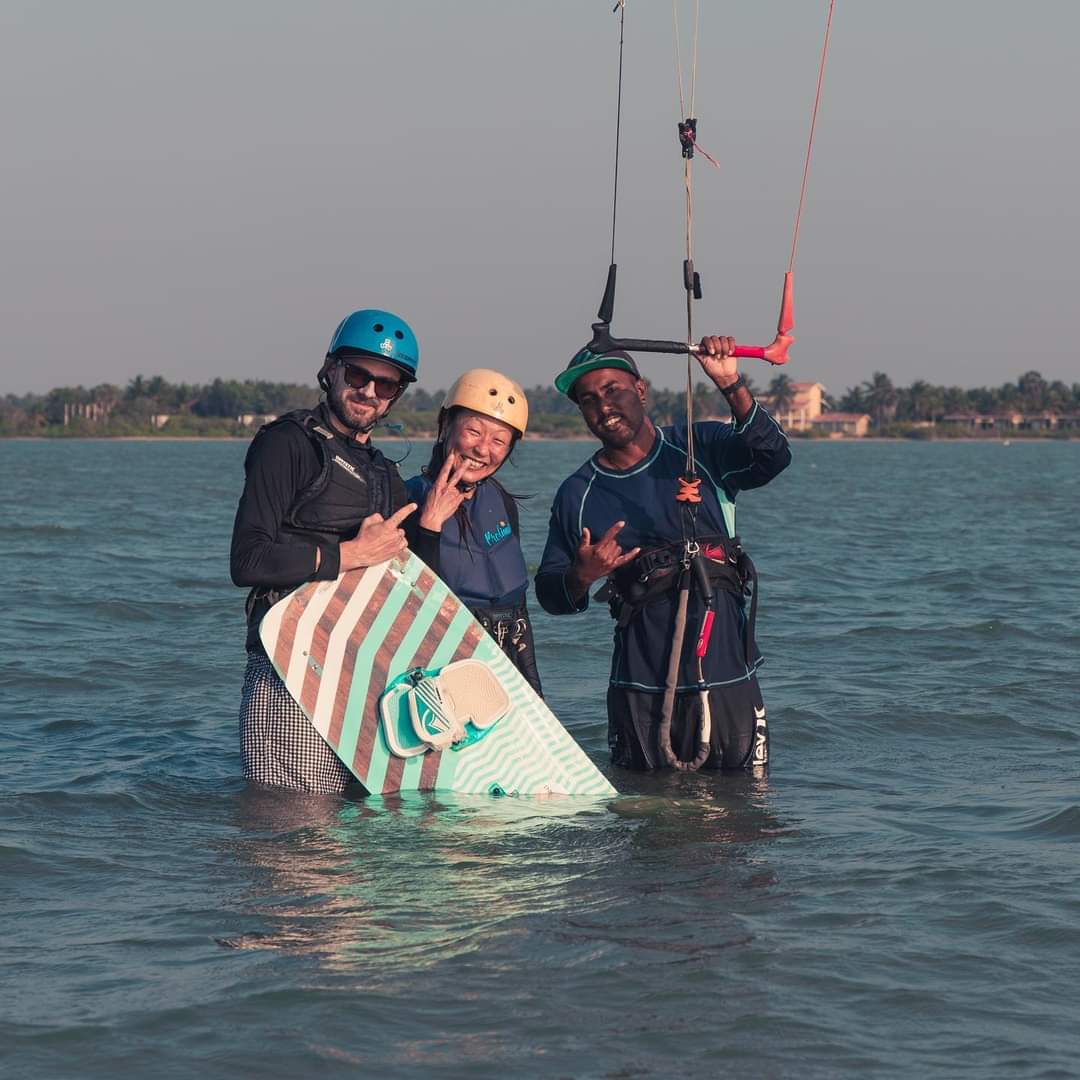
Tucked away on a slender peninsula on Sri Lanka's northwestern coast, Kalpitiya is one of the world's best-kept kitesurfing secrets — and those who find it tend to come back year after year. With two distinct wind seasons, a vast shallow lagoon, and open ocean breaks just minutes away, Kalpitiya offers something genuinely rare: world-class conditions for every skill level, from nervous first-timers to seasoned freeriders chasing big air.
At Surfpoint Sri Lanka Kite Village, we've been riding these winds since 2009. This is the guide we wish we'd had on our first day here.
Why Kalpitiya? A Quick Geography Lesson
Kalpitiya sits at the tip of a long, narrow peninsula that juts north into the Indian Ocean, flanked on one side by the Puttalam Lagoon — a vast, shallow body of water stretching over 160 km² — and on the other by open ocean. This geography is everything. It means that no matter which way the wind blows, there is almost always a rideable stretch of water within reach.
The town itself is small, relaxed, and genuinely welcoming. There are no crowds here. No high-rise hotels blocking the sea breeze. Just palm trees, fishermen's boats, and the steady hum of kites overhead.
The Two Wind Seasons: When to Visit
Kalpitiya is blessed with two separate kitesurfing seasons, making it one of the few destinations in the world where you can find reliable trade winds for the majority of the year.
Season 1: May to October (Southwest Monsoon)
This is our main season and the one most kiters plan their trip around. The southwest monsoon delivers consistent, cross-onshore winds that are nothing short of spectacular.
- Wind direction: Southwest to west-southwest
- Average wind speed: 18–28 knots, frequently touching 30+
- Character: Steady, thermal-boosted, reliable
- Best for: Freeriding, jumping, advanced techniques, and progression for intermediate riders
- Peak months: June, July, and August see the most consistent conditions
During this season, the lagoon side offers flatter water for technical riding, while the ocean side kicks up choppier, more exciting conditions for those who want to push their limits.
Season 2: December to March (Northeast Monsoon)
The second season is quieter, warmer, and arguably more beautiful. The northeast monsoon brings lighter, gentler winds that are ideal for beginners and intermediate riders.
- Wind direction: Northeast to north-northeast
- Average wind speed: 12–20 knots
- Character: Lighter, warmer, more forgiving
- Best for: Learning to kite, foiling, and relaxed freeride sessions
- Bonus: Spinner dolphins are incredibly active in these months — dolphin watching excursions are a must
December through March also brings calmer seas, making it the best time to take a boat excursion to Vella Island or explore the surrounding wildlife parks.
The Lagoon vs. The Ocean: Choosing Your Playground
One of Kalpitiya's great advantages is that you are never stuck with just one type of water. Depending on your skill level and what you're chasing that day, you have two very different experiences available.
The Kalpitiya Lagoon
The lagoon is where most riders — beginners and experts alike — spend the majority of their time. Here's why:
- Flat, shallow water: The lagoon averages just 1–2 metres deep in the main riding areas, making it safe and forgiving
- No waves: Virtually no chop means you can focus entirely on technique without fighting the water
- Ideal for learning: The shallow depth means you can stand up anywhere if something goes wrong
- Perfect for freestyle: The flat surface is a dream canvas for handle passes, board-offs, and unhooked tricks
The Open Ocean
For more experienced riders looking for a different kind of thrill, the ocean side delivers. Waves, chop, and the open expanse of the Indian Ocean create challenging, exhilarating conditions.
- Wave riding and strapless surfing opportunities during stronger wind periods
- More powerful gusts and larger kite-looping potential
- Downwinder runs that end with a boat pickup — no walking required
What Size Kite Should You Use in Kalpitiya?
Wind strength varies through both seasons, so it helps to know roughly what you're working with before you arrive.
- Light wind days (12–16 knots): 12m–14m kites; foil boards are excellent in these conditions
- Average conditions (17–22 knots): 10m–12m kites; twin-tip or directional depending on preference
- Strong days (23–30+ knots): 7m–9m kites; experienced riders only on these days
Not sure what to bring or whether to rent? Our team at Surfpoint will assess the wind with you every morning and recommend the right setup. All our rental gear is serviced daily and matched to the conditions.
Getting to Kalpitiya
Kalpitiya is approximately 3.5 to 4 hours by road from Colombo. Most guests fly into Bandaranaike International Airport and either hire a private transfer or take a combination of train and tuk-tuk. We're happy to arrange airport transfers for all Surfpoint guests — just let us know your arrival time when you book.
Ready to Ride?
Whether you're here for your very first kitesurfing lesson or your tenth trip to Kalpitiya, the wind here has a way of getting under your skin. There's something about the flatness of the lagoon at sunrise, the warm salt air, and the steady pull of a kite above you that feels genuinely addictive.
Come and feel it for yourself. The Surfpoint kite family will be waiting on the beach.
