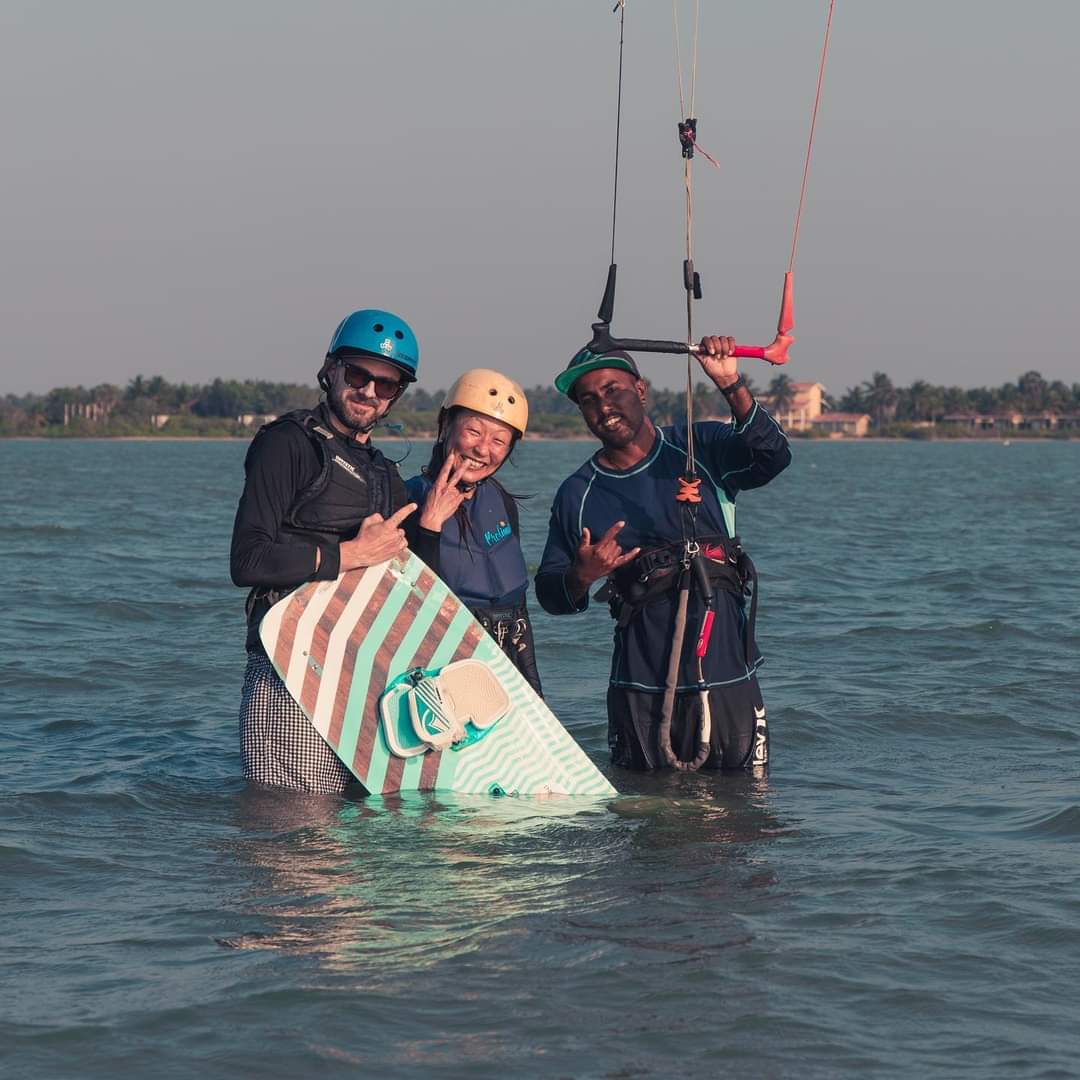
The Kalpitiya Lagoon is a world-class destination for a reason. Its vast, shallow, butter-flat waters offer a dream canvas for everyone from first-time students to professional freestyle riders. However, during the peak summer (Yala) and winter (Maha) seasons, the lagoon becomes a vibrant hub where dozens of kites share the same wind window.
At Surfpoint Sri Lanka Kite Village, we have been part of this community since 2009. We believe that safety isn't just about technical skill—it’s about a shared culture of respect. To keep our "Kite Family" safe and the vibes high, every rider must master the international IKO right-of-way (ROW) rules and local lagoon etiquette.
Why Lagoon Etiquette is the Foundation of Our Community
When the Venturi effect kicks in and the wind stabilizes at 20-25 knots, the Kalpitiya Lagoon can see upwards of 30 kiters at once. In such a dynamic environment, predictability is your best friend. Following established etiquette prevents collisions, protects expensive gear, and ensures that everyone—regardless of their skill level—can enjoy their session without fear.
The Universal Language: IKO Right-of-Way Rules
Navigating a busy flat-water spot requires a strict adherence to international maritime and IKO standards. These rules are designed to remove guesswork from the water.
The Starboard vs. Port Tack Priority
This is the most fundamental rule of the water. When two kiters are on a collision course, the starboard-tack rider (those moving to their right with their right hand forward on the control bar) has the right of way. They should maintain their course and speed. The port-tack rider (those moving to their left with their left hand forward) must yield by altering their course downwind to pass safely.
The Golden Rule: Kite Positioning
When two kiters pass each other closely, they must coordinate their kite heights to avoid tangling lines.
- The Windward (Upwind) Rider: Must fly their kite HIGH (typically above 45 degrees).
- The Leeward (Downwind) Rider: Must fly their kite LOW (typically below 30 degrees). This "high-low" protocol ensures that the upwind kiter's lines pass cleanly over the downwind kiter’s setup.
Overtaking and Safety Buffers
If you are moving faster than the rider in front of you, the burden of safety is on you. The lead (slower) rider always has the right of way. As the overtaking rider, you must yield and maintain at least one full kite-length of safety buffer before making your move.
Local Etiquette for Kalpitiya’s Unique Geography
The Kalpitiya Lagoon has specific geographic features, such as the long sandbar and shallow muddy zones, that require additional awareness.
Shoreline Priority: Entering vs. Landing
Beach etiquette dictates that the kiter entering the water has absolute priority over the rider looking to land. Being on land with a powered kite is statistically more dangerous due to hard surfaces and obstacles. If you are out in the water and see someone preparing to launch, stay offshore until the launch zone is entirely clear.
Respecting the Safety Zone for Tricks
Kalpitiya is a freestyle mecca, but big air and unhooked maneuvers require space. To jump safely, a kiter must ensure they have a clear safety zone of at least 50 meters downwind and 30 meters upwind. Always look behind and downwind of you before loading your edge for a jump; never assume others see you are about to pop.
Yielding to Downed Kiters and Other Users
Always give a wide berth to anyone in the water, whether they are swimming, body-dragging for a lost board, or relaunching their kite. Furthermore, remember that we share these waters with the local fishing community and other beach users. Right of way must always be granted to non-kite users; always travel downwind of them to ensure their safety.
How Surfpoint Ensures a Safe Haven for Every Rider
At Surfpoint Sri Lanka, safety is built into our operational DNA. We don't just teach you how to ride; we teach you how to be a responsible member of the global kite community.
IKO-Certified Oversight
Our team of IKO-certified instructors is constantly monitoring the lagoon. For our students, we utilize radio helmet coaching, allowing instructors to provide real-time safety guidance and ROW reminders while you are in the water.
Constant Monitoring and Rescue Support
Because our center is situated directly on the beach, our staff and beach assistants have a panoramic view of the riding zone. We provide dedicated rescue boat services at key locations to assist anyone who finds themselves in trouble, ensuring that a mechanical failure or a downed kite doesn't turn into a dangerous situation.
The "Kite Family" Briefing
Every guest who joins the Surfpoint family receives a briefing on local conditions and spot-specific rules. We believe that by fostering a social, communal atmosphere at our beachfront restaurant and bar, riders are more likely to look out for one another on the water.
Respect the Wind, Respect the Rider
Kitesurfing in Kalpitiya is an incredible experience that is made better when everyone plays by the rules. By mastering these IKO standards and respecting local lagoon etiquette, you contribute to the safety and longevity of this beautiful sport.
Ready to ride with the best? Join the Surfpoint team this season. Whether you are taking your first lessons or looking to master unhooked freestyle, we’ll make sure you do it safely, professionally, and with the full support of our kite family.
