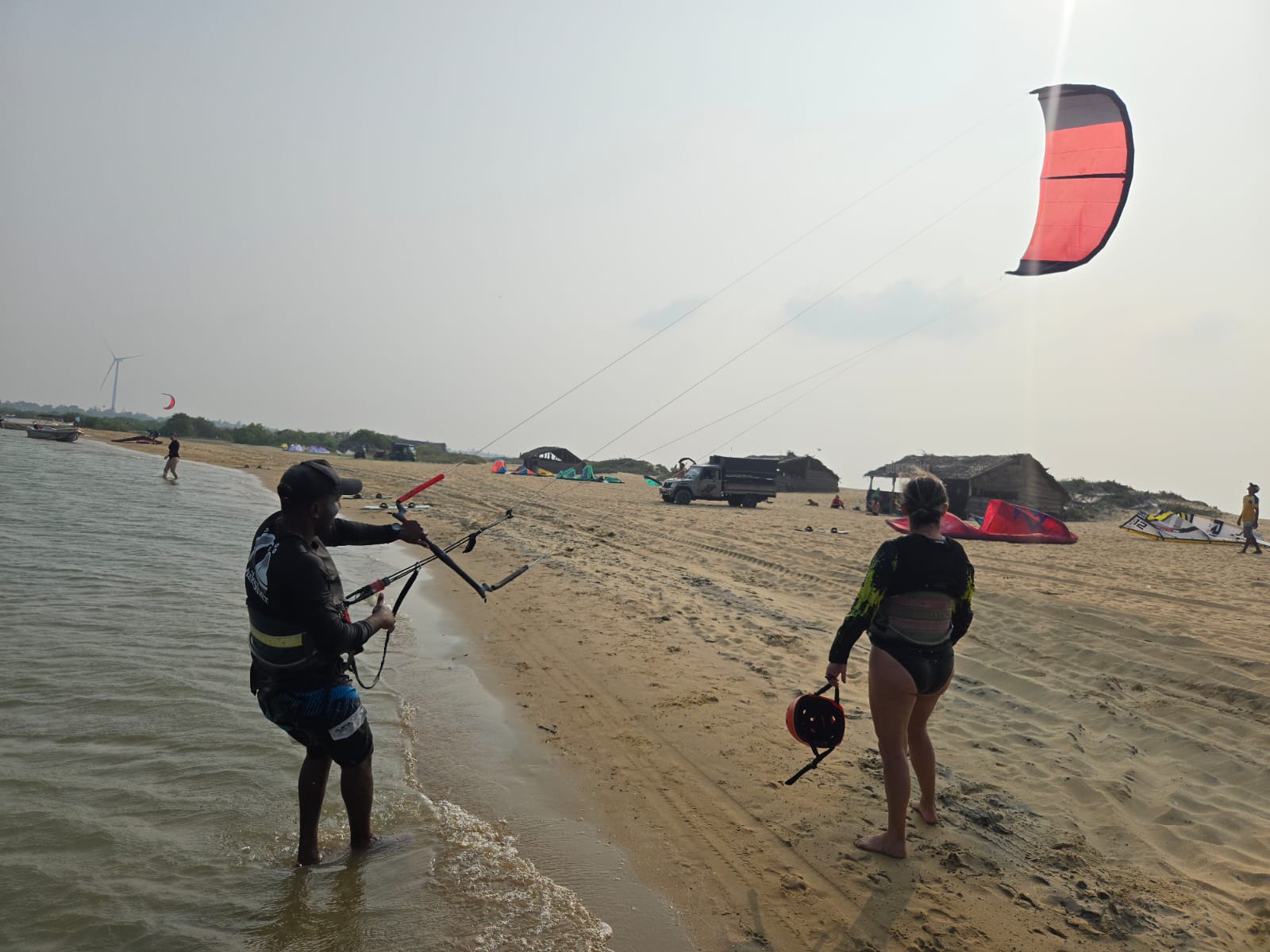
It's one of the most common questions we get from guests planning a trip to Surfpoint: "Should I bring my own gear or rent from you?" It's a genuinely good question — and unlike some kite schools, we're going to give you an honest answer rather than just telling you to rent.
The truth is: for most riders visiting Kalpitiya, renting makes more sense. But there are specific situations where bringing your own kit is the right call. Here's everything you need to know to make the decision that works for your trip.
The Real Cost of Flying With Kitesurfing Gear
Let's start with the numbers, because this is where most kiters make their decision — and where a lot of people underestimate what they're actually spending.
Typical Airline Baggage Fees for a Kite Bag
A full kitesurfing setup — kite, bar and lines, twin-tip board — typically weighs between 15 and 25 kilograms and falls into the oversized sports equipment category for most airlines. What that costs you depends heavily on who you're flying with, but here's a realistic range:
- Budget European carriers (Ryanair, easyJet, Wizz): €40–€80 each way for the first bag, with sports equipment surcharges often adding another €20–€50. Connecting flights multiply this.
- Full-service carriers (Emirates, Qatar, SriLankan Airlines): More generous baggage allowances, but oversize fees still typically run €50–€100 each way for kite bags
- Round-trip total: Realistically, expect to pay €100–€300 in baggage fees alone for a return trip with a full kite setup — and that's before any damage, delay, or lost luggage scenarios
Now add the stress of checking in oversized luggage, hoping it arrives intact on the other end, and managing a large, awkward bag through multiple airport connections. For many riders, the calculus shifts quickly.
The Hidden Costs Nobody Mentions
- Damage in transit: Kite bladders, leading edges, and board fins are all vulnerable to rough baggage handling. A single incident can cost €50–€200+ to repair.
- Transfer logistics: Getting a large kite bag into a tuk-tuk, local bus, or small transfer vehicle in Sri Lanka is genuinely awkward. It adds time and sometimes extra cost to every leg of your journey.
- Carrying the wrong sizes: You pack your 12m and your 9m at home based on what you think the conditions will be — but wind is unpredictable. Rental fleets give you flexibility to switch sizes on the day.
What Renting at Surfpoint Actually Costs
We maintain a full fleet of premium twin-tip boards and kites in multiple sizes, all available for daily or weekly rental. Our gear is sourced from leading brands and replaced regularly to ensure performance and safety.
Rental rates at Surfpoint are straightforward and designed to be genuinely competitive when measured against the true cost of flying with your own equipment. Contact us directly for current pricing — rates vary slightly by season and package.
What every rental includes:
- Full kite setup including bar, lines, and pump
- Twin-tip board with fins and pads
- Daily safety inspection and maintenance by our technical team
- Size swap if conditions change — no extra charge
- Access to our full range of kite sizes from 7m to 14m
The Daily Maintenance Advantage
This is the part of the rental argument that doesn't get talked about enough: our gear is checked and serviced every single day.
When you bring your own kit, you're riding with whatever condition your gear was in when you packed it — and after a full season of use, most kites have at least a few small issues that owners have learned to live with. A slow bladder leak. A slightly worn bridle. A bar that's due for new chicken loop lines.
At Surfpoint, our technical team inspects every kite, every bar, and every board before it goes out each morning. Lines are checked for wear. Bladders are tested. Safety release systems are verified. You get on the water knowing your gear is in peak condition — not hoping it is.
For riders who take a break from kiting between trips and haven't checked their equipment recently, this alone can be a compelling reason to rent.
The Size Flexibility Factor
Wind in Kalpitiya is consistent, but it is not perfectly predictable. A day that starts at 18 knots can build to 26 by the afternoon. A forecasted strong day can arrive lighter than expected.
When you fly with your own gear, you bring the sizes you planned for. When conditions change, you ride what you have — which sometimes means riding overpowered, underpowered, or not at all.
When you rent from Surfpoint, you choose your kite size each morning based on the actual conditions. Our team will advise you on the right setup for the day, and if the wind shifts significantly during your session, you can swap sizes at no additional charge.
For riders visiting for a week or more, this flexibility can meaningfully improve the quality and safety of every single session.
When You Should Bring Your Own Gear
We promised an honest answer, and here it is: there are genuine situations where bringing your own kit makes sense.
- You ride highly specialised equipment: If you're on a custom foil setup, a specific freestyle twin-tip, or a directional board that we don't stock, you may prefer your own gear. Check with us in advance — our fleet covers most mainstream setups but not every niche configuration.
- You're on an extended trip (3+ weeks): At a certain point, the accumulated rental cost over a very long stay can exceed the baggage fees. For trips over three weeks, run the numbers against our weekly rental rates and decide accordingly.
- You're competing or training for a specific discipline: Freestyle competitors and foil racers often have equipment tuned specifically to their body and style. That level of personal calibration is hard to replicate with rental gear.
- Your gear is brand new and you want to ride it in: Fair enough. We get it. There's something satisfying about breaking in new kit on a dream trip.
A Practical Guide: What to Bring Regardless
Whether you rent or bring your own kites and board, there are a few personal items worth packing regardless:
- Your own harness: Harnesses are very personal — fit, padding, and hook position all matter. If you have one that works well for you, bring it. It's compact and lightweight compared to the rest of the kit.
- Helmet and impact vest: We provide these as part of lessons and can include them in rental packages, but if you have your own and prefer the fit, bring them.
- Bar knife and safety whistle: Small, light, and genuinely important safety items that every experienced rider should carry regardless of where they're riding.
- Spare fins: Board fins are easy to lose and not always the easiest thing to source in a small town. A spare set weighs almost nothing.
The Bottom Line
For the majority of riders visiting Kalpitiya for one to two weeks, renting from Surfpoint is the smarter choice. The baggage fee savings are real, the gear quality is high, the daily maintenance gives you peace of mind, and the size flexibility genuinely improves your riding experience.
If you have a specific reason to bring your own kit, we'll never try to talk you out of it — and our team is happy to help you set up and store your gear safely throughout your stay.
Still not sure? Get in touch before you book and we'll give you an honest recommendation based on your riding level, the length of your stay, and what you're hoping to get out of your time here. That's the kind of kite family we are.
