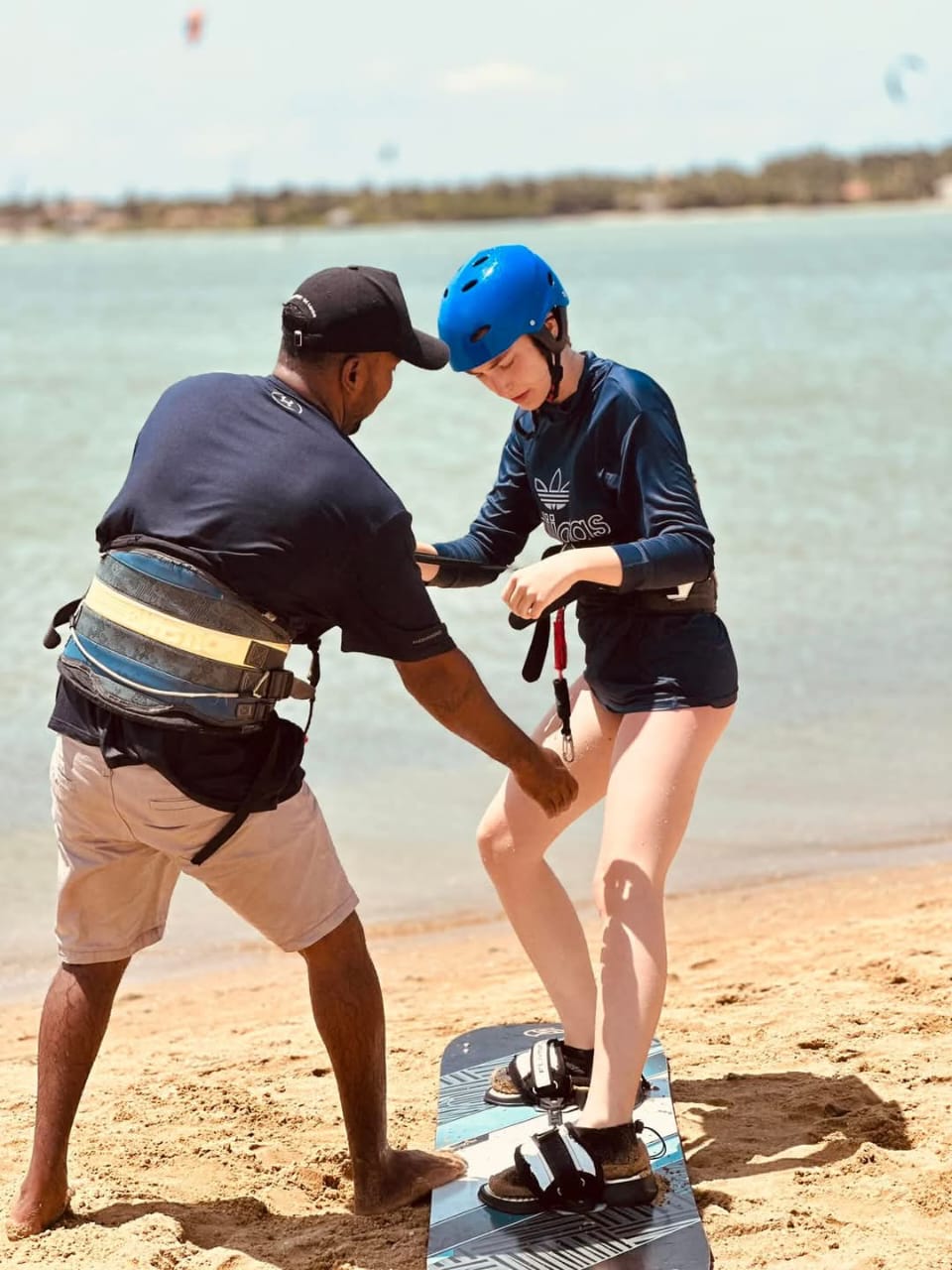
So you've watched the videos. Maybe a friend came back from Sri Lanka raving about it. Maybe you spotted a kite arcing across a blue sky and thought: I want to do that. Whatever brought you here, welcome — because learning to kitesurf in Kalpitiya is one of the best decisions you can make for your next adventure holiday.
Here at Surfpoint Sri Lanka Kite Village, we've taught hundreds of complete beginners since 2009. This guide will walk you through exactly what to expect — no sugarcoating, no overwhelm, just honest information so you arrive prepared and confident.
Is Kitesurfing Hard to Learn?
Let's be honest: kitesurfing has a real learning curve. It's not something you master in an afternoon. But it is absolutely learnable, and with the right environment and instruction, most people are riding independently within 6–12 hours of lessons.
The good news? Kalpitiya is genuinely one of the easiest places in the world to learn. And that's not just marketing. The conditions here are almost uniquely suited to beginners, and we'll explain exactly why below.
Why Kalpitiya's Flat Water Is Perfect for Learning
The Puttalam Lagoon — where we do all beginner training — has qualities that are rare and genuinely valuable when you're just starting out.
Shallow Water Means Safety
The lagoon averages just 1 to 2 metres in depth across most of the training area. If you drop your kite or lose your board, you can almost always stand up. This removes one of the biggest mental barriers for new riders: the fear of deep water. When you know you can put your feet down, you relax — and relaxed learners progress faster.
No Waves, No Chaos
Ocean waves are beautiful when you're experienced enough to ride them. For a beginner, they're just noise that makes everything harder. The lagoon is almost completely flat, which means:
- You can focus 100% of your attention on the kite, not on staying upright
- Water starts (getting up on the board) are much easier without swell pushing you around
- Your instructor can see and reach you quickly if needed
Consistent, Manageable Wind
During the December to March season — which we particularly recommend for beginners — winds tend to be steady and in the 14–20 knot range. That's ideal learning wind: enough to fly a kite properly, not so strong that it feels overwhelming. The southwest season (May–October) offers stronger winds but is still perfectly manageable under proper instruction.
What Happens on Day One of Your Kitesurfing Lessons?
Forget the board. Day one is all about the kite — and that's exactly right. Rushing beginners onto a board before they're comfortable with kite control is one of the most common mistakes at lower-quality schools. At Surfpoint, we follow the IKO (International Kiteboarding Organisation) curriculum, which builds skills step by step.
Morning Briefing (Approximately 30–45 Minutes)
Your certified IKO instructor will cover:
- How a kite and its power zone work
- Wind window theory — understanding where the kite generates power
- Safety systems: how to release the kite instantly if anything goes wrong
- Right-of-way rules on the water
- Beach launch and landing procedures
This isn't dry theory. It's directly relevant to everything you'll do in the water, and it makes you safer from hour one.
Body Dragging in the Water
Before you ever touch a board, you'll spend time learning to body drag — being pulled through the water by the kite alone. This teaches you:
- How to steer the kite with precision
- How to generate and reduce power smoothly
- How to recover yourself and your board if you fall
Body dragging sounds unglamorous, but it is genuinely the foundation of kitesurfing. Students who master it progress to riding much faster than those who skip ahead.
First Board Attempts (Often Day 2 Onwards)
Once your instructor is satisfied that your kite control is solid, you'll be introduced to the board. You'll learn the water start — the technique of using kite power to lift yourself from the water onto the board — and start working on your first gliding runs across the lagoon.
The first time it clicks? That feeling is hard to describe. It's part flying, part surfing, part pure joy.
Why IKO Certification Matters — and What It Means for You
Not all kitesurfing schools are equal, and the difference matters enormously when you're learning. At Surfpoint, every instructor holds IKO certification — the international gold standard for kitesurfing instruction.
Here's why that should matter to you:
- Structured progression: IKO instructors follow a proven curriculum. You never skip steps that matter for your safety.
- Internationally recognised: Your IKO student card (issued after lessons) is recognised at schools worldwide. If you want to continue lessons anywhere else in the world, your progress is documented and respected.
- Safety first: IKO training includes rigorous safety protocols. Our instructors know how to manage emergencies, read changing conditions, and keep you out of trouble before you get into it.
- Better learning outcomes: Because the curriculum is evidence-based, students at IKO-certified schools consistently progress faster and more safely than those at non-certified operations.
What Should You Bring to Your First Lesson?
- Swimwear — you will get very wet
- Rash guard or UV shirt — the Sri Lankan sun is powerful, and sunburn through a wetsuit is no fun
- Sunscreen (reef-safe preferred) — apply before you arrive, not on the beach
- Secure footwear — reef shoes or water booties if you're nervous about the bottom; the lagoon is sandy and mostly soft
- Water bottle — kiting is more physically demanding than it looks
- Enthusiasm — the most important item on the list
All kitesurfing equipment — kites, bars, boards, harnesses, and helmets — is provided as part of your lesson package at Surfpoint. You don't need to bring or buy anything technical before you arrive.
How Many Lessons Do You Need?
Everyone progresses at a different pace, and any school that gives you a guaranteed number of hours to independent riding is being optimistic at best. That said, here's a realistic guide:
- 6 hours: Solid kite control, confident body dragging, first board attempts
- 9–12 hours: Most students achieve their first independent runs
- 12–15 hours: Riding both directions with basic control
- 20+ hours: Consistent riding, working on upwind technique
We offer lesson packages starting from a single session up to full week-long beginner intensives. If you're serious about making real progress, we recommend booking at least 9 hours across 3 days as your starting point.
Can Anyone Learn to Kitesurf?
Generally, yes — with a few practical considerations. You should be a confident swimmer, be in reasonable physical health, and be comfortable being in open water. Kitesurfing is accessible to a wide age range; we've successfully taught students from their teens well into their fifties and beyond.
If you have specific health concerns or physical limitations, reach out to us before booking. We'll give you an honest answer about what to expect.
Your First Kite Session Starts Here
Kalpitiya's lagoon is waiting. The wind is steady. Your instructor is ready. All that's missing is you.
Get in touch with the Surfpoint team to check availability, ask any questions, or book your beginner lesson package. There's no pressure, no hard sell — just a team of passionate kiters who genuinely love helping people discover this sport for the first time.
See you on the water.
